Leveraging the Role of Development Finance in Advancing Women’s Economic Empowerment
Global stability in 2026 is shaped by a convergence of challenges. Heightened geopolitical tensions and security risks, combined with slower global growth, elevated uncertainty, and persistent inequality, are contributing to a more complex operating environment for governments and investors alike.1 At the same time, shifts in development finance and evolving priorities for sustainability and inclusion are influencing how capital is deployed. Yet the economic imperative to invest in women remains firm.
Latest UN data shows the world is far off track to achieve gender equality by 2030, with progress slowing or reversing across key areas such as women’s economic opportunity, leadership, safety, and legal rights.2 The data should also serve as a warning: closing these gaps will require an additional USD360 billion annually, underscoring the urgent need for stronger ambition and financing to make SDG 5 a reality.3
When women are fully engaged as entrepreneurs, leaders, workers, and consumers, economies become stronger and more resilient. Investing in women is a powerful and underutilized driver of economic growth, commercial and social returns. Closing gender gaps in employment and entrepreneurship could raise global gross domestic product by more than 20% and by as much as 45% in emerging and developing economies alone.4,5 Women also play a central role in shaping markets and driving economic activity, influencing an estimated 70 to 80% of consumer spending decisions globally.6
Development and multilateral finance institutions play a critical role in advancing inclusive growth. By acting as bridges between public and private capital, development and multilateral finance institutions can catalyze investments, mobilize expertise, and support the implementation of the UN Agenda for Sustainable Development and the objectives of the Paris Agreement, including in fragile and vulnerable contexts.
The 2X Challenge, first launched at the G7 Summit in Canada in 2018, and which is underpinned by the 2X Criteria – now recognized as a global standard – mobilizes capital that meaningfully supports women’s economic empowerment. By 2023, the 2X Challenge mobilized over USD34 billion in investments advancing women’s economic empowerment in the private sector.
The G7 Leaders’ Summit, held in Italy in 2024, welcomed the renewed 2X Challenge target to invest at least USD20 billion between 2024 and 2027 by development and multilateral finance institutions, with expanded participation from private sector investors.
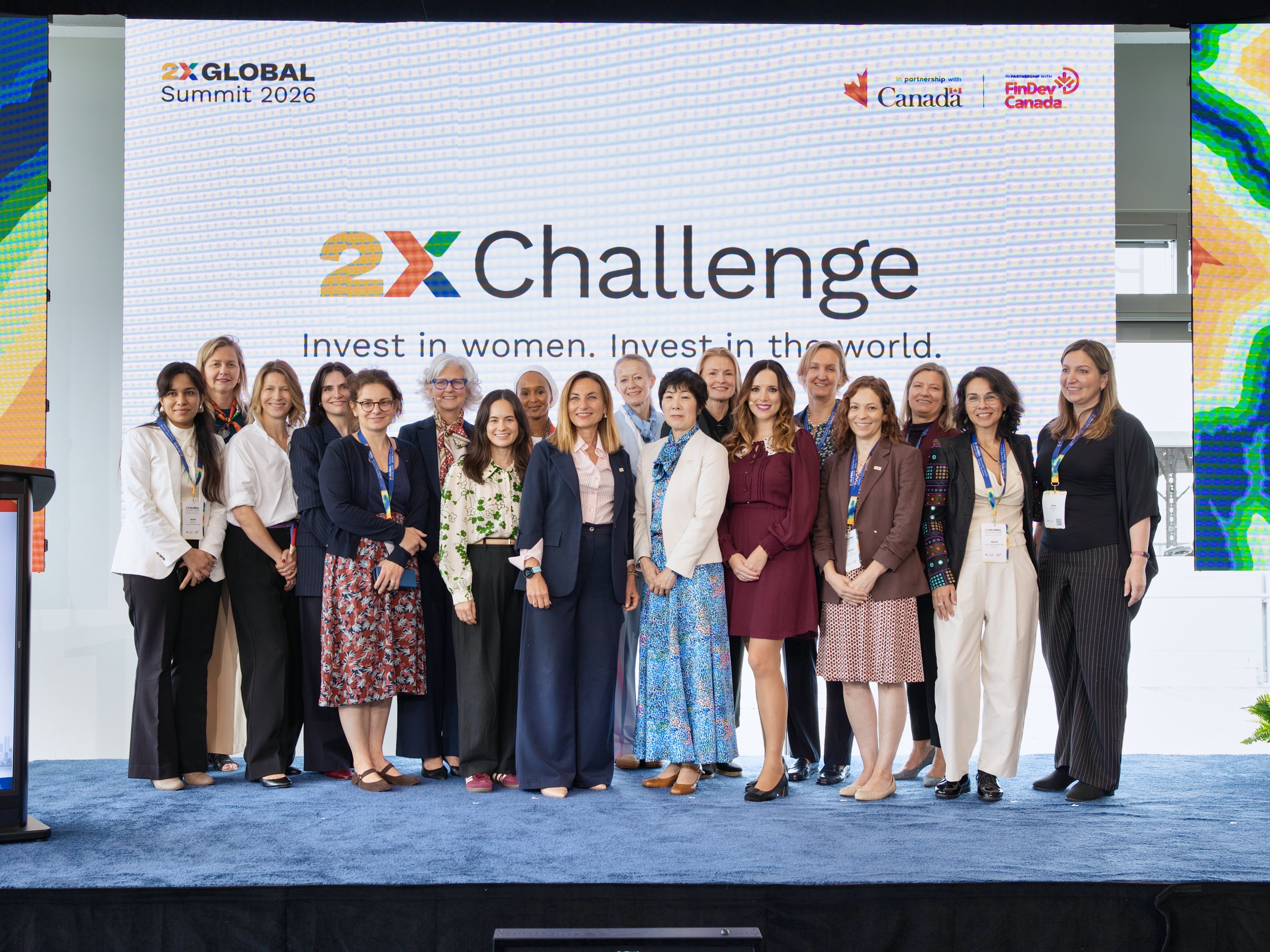
Today, at the 2X Global Summit in Canada, the development and multilateral finance institutions below endorse this Statement of Intent to reaffirm our commitment to advancing women’s economic empowerment through our investments and activities within our respective institutional mandates. We commit to strengthening coordination among ourselves and with international partners, building on the commitments advanced under the Italian G7 Presidency in 2024. We also call on other public and private actors to join us in this effort.
We intend to focus our collective efforts on the following priorities:
- contributing to the 2024-27 2X Challenge target;
- mobilizing private capital at scale for women’s economic empowerment;
- supporting investees to strengthen alignment with the 2X Criteria over time;
- exploring opportunities to incorporate considerations for women across sectors and asset classes, including climate finance investments;
- sharing learnings and evidence from our investment portfolios and approaches to investing in women; and,
- promoting women’s safety and security through robust environmental and social risk management, including the prevention and management of risks related to gender-based violence and harassment, alongside strong governance and accountability practices.
We reaffirm our shared commitment to advancing women's economic empowerment via the 2X Challenge and to working together to support high-impact initiatives and investments that promote a more equitable, inclusive, and sustainable future for women globally.
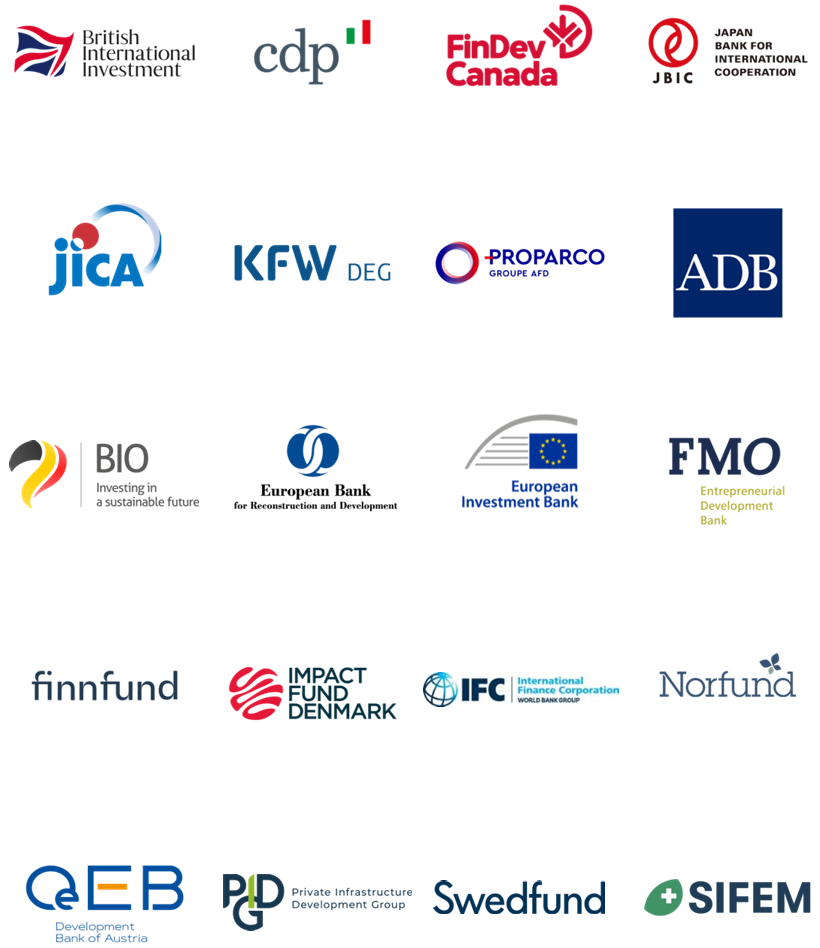
Endorsed by 2X Challenge participating development and multilateral finance institutions below
Examples of 2X-qualified investments
- EcoEnterprises Fund IV is a USD120 million women-owned and women-led, 2X-qualifying fund that invests in small and medium‑sized enterprises (SMEs) and growth‑stage businesses across Latin America. Focused on nature-based and low‑carbon sectors, including sustainable agriculture and forestry, renewable energy, and the circular economy, the fund supports jobs and economic development in rural and smallholder communities. It targets a carbon-neutral portfolio by 2030 and is committed to ensuring that at least 50% of its portfolio meets the 2X Criteria by the end of the fund’s life. In 2025, FMO, FinDev Canada, IFC, Proparco, JICA, and SIFEM collectively invested USD70 million in the fund.
- Equatorial Maranhão Distribuidora de Energia S.A. is a Brazilian electricity distribution company serving nearly three million customers in the state of Maranhão. In 2026, FinDev Canada provided USD 30 million to expand electricity access and improve grid reliability, particularly in rural and low-income communities. As a 2X-qualified investment, the company has meaningful women’s representation in its workforce and is committed to increasing women's participation in operational and technical roles through initiatives such as an electrician apprenticeship program. Equatorial Maranhão is also advancing gender-inclusive procurement practices and strengthening supplier standards on gender equity and non-discrimination.
- Şekerbank T.A.S is a leading private bank with deep expertise in rural inclusive banking spanning 73 years throughout Türkiye. It is the first bank to be supported by the TERRA (Transforming and Empowering Resilient and Responsible Agribusiness) programme, promoted by Cassa Depositi e Prestiti (CDP), the Food and Agriculture Organization of the United Nations (FAO), and the European Union (EU), which supports micro, small and medium-sized agricultural enterprises, with a focus on women’s entrepreneurship. Through this EUR 15 million 2X-qualified investment, 40% of the funds will be allocated to women-led agricultural businesses.
- Vietnam Prosperity Joint Stock Commercial Bank (VPBank), one of Vietnam’s leading commercial banks, is expanding access to finance for women-owned micro, small, and medium-sized enterprises (WMSMEs) through USD175 million from JICA and FinDev Canada in 2025. More than 70% of this financing will be directed to WMSMEs, supporting women entrepreneurs in accessing capital to grow their businesses, sustain jobs, and contribute to local economic development. As a 2X-qualified transaction, the investment advances women’s economic empowerment and supports more inclusive and sustainable growth in Vietnam.
- hummingbirds is a female-founded/led nature-based solutions developer with over 50% women in senior management and across its wider team. hummingbirds has set up an investment platform to scale-up community driven nature conservation and restoration projects across Africa, Asia and Latin America to address the drivers of deforestation and protect biodiversity. BII, Proparco and Swedfund have jointly 2X qualified their investments into this platform, securing a commitment for at least half of the platform’s underlying projects to meet at one of the 2X Criteria - for example through job creation opportunities for women in mangrove restoration projects and improved cookstove projects benefiting the health and livelihoods of women in rural communities. The DFIs jointly invested €45 million, with hummingbirds providing an additional €5m in seed capital for the platform.